
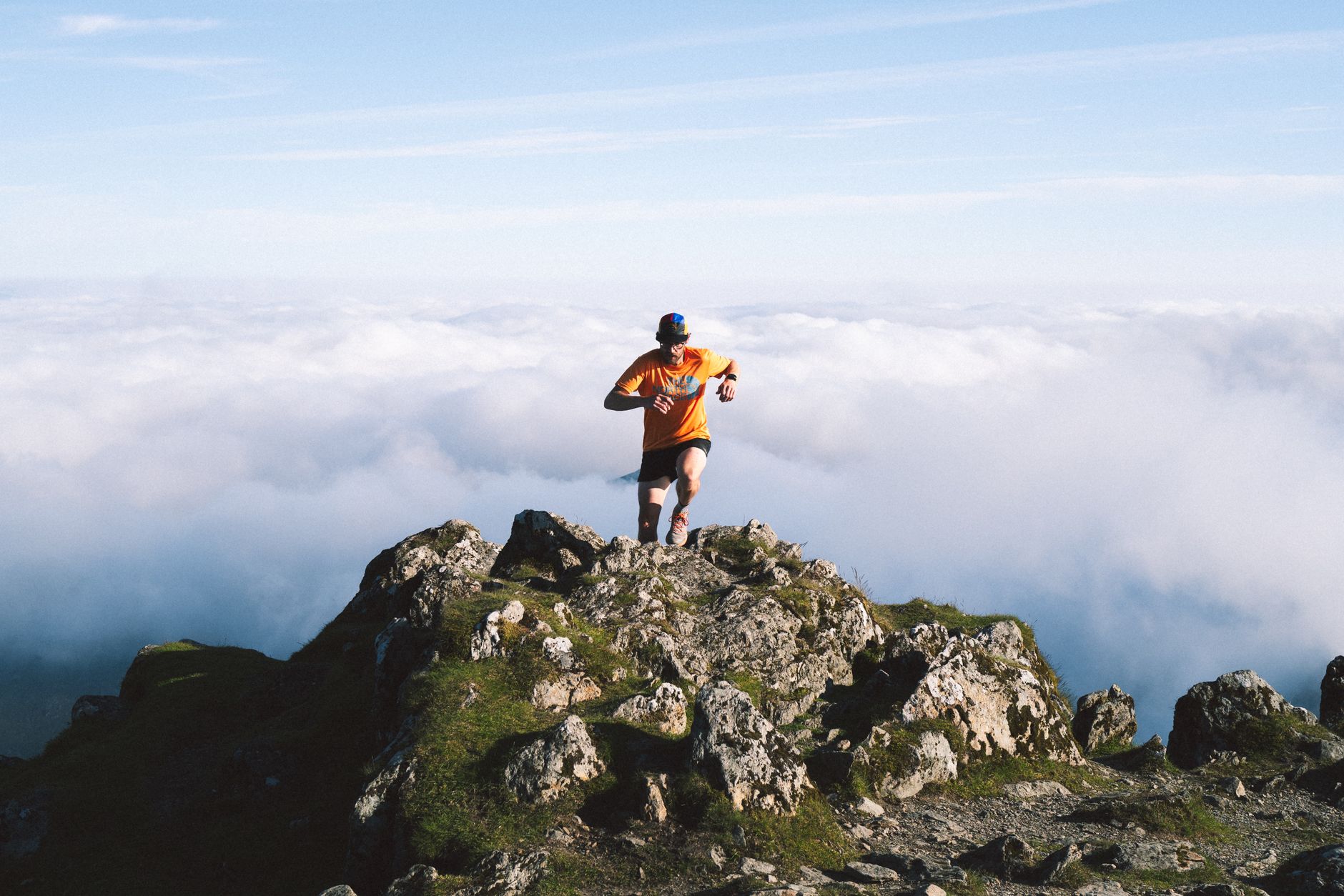
Building the Right Fitness Base Before You Start
Most people underestimate how different fell walking fitness is from general gym fitness. You might be able to run 5k without breaking a sweat, but add a loaded pack, 800 metres of ascent, and a boggy ridge in the rain and it becomes a completely different challenge. The good news is that targeted training makes an enormous difference, and you do not need to be an athlete to get expedition-ready.
Start by being honest about where you are right now. If you are currently doing very little cardio exercise, give yourself at least 12 weeks before a serious expedition. If you already walk regularly and do some running or cycling, eight weeks of focused training may be enough. The key word is “focused”. Wandering the same flat park loop three times a week will not prepare you for a 25-kilometre day in the hills.
Your base fitness goal is simple: build your aerobic engine. That means sustained, moderate-intensity effort for 45 to 90 minutes, done consistently. Walk, run, cycle, swim. The specific activity matters less than the regularity and duration. Three to four sessions per week of 45 to 60 minutes is a solid starting point for someone eight to twelve weeks out from their expedition.
Progressive Loading: The Key Principle Most Hikers Ignore
Progressive loading means gradually increasing the stress you place on your body over time, so it adapts rather than breaks down. For fell walking, this applies to three variables: distance, elevation gain, and pack weight. Try to increase only one of these at a time to manage injury risk.
Distance progression
In week one, aim for walks of around 10 to 14 kilometres. Add roughly 10 to 15 percent extra distance each week. By week eight, you should be completing at least one walk per week of 20 to 25 kilometres. Do not add distance every single session. Have two shorter, easier days for every longer training walk.
Elevation gain
This is the one most people neglect because it is easy to do flat walks. Ascent is what destroys legs on a real fell expedition. If you live in a flat area, use stairs, a treadmill on incline, or even a local car park ramp. Aim to include at least 300 to 500 metres of total ascent in your longer training walks. If you are preparing for something like the National Three Peaks 24 Hour Challenge, which involves roughly 3,000 metres of ascent in total, your training needs to include sustained climbing regularly.
Pack weight
Train with the kit you plan to carry. Start with a light pack of around 5 to 6 kilograms and work up to the full weight over the training block. Your legs and hips adapt to carrying load in ways that cannot be replicated by unloaded walking. Wearing broken-in boots during training walks is also non-negotiable. Saving your new boots for the actual expedition day is one of the most common and painful mistakes people make.
Strength Training That Actually Transfers to the Hills
Cardio alone will not cut it. The descents on a challenging fell walk are often harder on your body than the ascents, and weak quads and knees will be screaming by kilometre 15. A basic lower-body strength routine done twice a week can make a huge difference.
Essential exercises
Focus on movements that mimic the demands of hill walking. Single-leg exercises are especially useful because they train each leg independently, just as it works on uneven terrain. Good options include:
- Bulgarian split squats – three sets of 10 to 12 reps each leg. Brutal but effective for building quad and glute strength.
- Step-ups with a weighted pack – use a sturdy bench or box. Perform 3 sets of 15 reps each leg. This directly mimics uphill movement.
- Romanian deadlifts – three sets of 10 to 12 reps to strengthen hamstrings and lower back, both of which take a beating on long days.
- Calf raises on a step – three sets of 20 reps. Your calves work constantly on steep terrain, and neglecting them leads to cramping.
- Glute bridges or hip thrusts – two sets of 15 to 20 reps to stabilise the hips on side-slopes and awkward ground.
You do not need a fancy gym. Most of these can be done at home with a heavy backpack as resistance. Keep rest between sets to 60 to 90 seconds to build muscular endurance rather than maximum strength.
Back-to-Back Days and the Long Weekend Session
One of the best training strategies for a multi-day expedition is the back-to-back weekend session. Walk on Saturday, then walk again on Sunday, tired. This trains your body to perform under accumulated fatigue, which is exactly what a multi-day challenge demands.
Start with shorter back-to-back days: perhaps 12 kilometres on Saturday and 10 on Sunday. Progress over your training block until you are completing 20 kilometres followed by 18 kilometres. The Sunday session should feel hard. That is the point. Your legs will adapt to recovering overnight and going again the next morning, which is precisely the skill you need for expeditions like the West Highland Way.
At Orange John Mountain Guide, the team regularly sees participants arrive on day one full of energy, only to struggle badly on day two because they never trained their recovery. Adding back-to-back days to your plan removes that risk almost entirely.
Nutrition and Hydration During Training
Your body needs fuel to adapt to training. This is not about following a strict diet. It is about eating enough of the right things at the right times, and practising your expedition nutrition strategy during training walks.
Aim to eat a carbohydrate-rich meal two to three hours before a long training walk. During walks lasting more than 90 minutes, eat something small every 45 to 60 minutes. Good options include flapjacks, bananas, trail mix, or energy gels if you prefer them. The goal is to keep blood sugar stable and avoid the bonk, that sudden, horrible wall of exhaustion that hits when you run out of available energy.
Hydration is equally important. A common guideline is 500ml of water per hour of walking, more in warm weather or on steep terrain. Electrolyte tablets added to your water are worth considering on hot days or when you are sweating heavily. Practice this routine in training so it feels automatic on the expedition.
Recovery: The Training You Cannot Skip
Rest days are not optional extras. They are when your body actually gets stronger. Overtraining leads to fatigue, injury, and declining performance, none of which you want in the weeks before a big challenge.
Build at least one full rest day per week into your plan. On easier days, low-intensity movement like gentle cycling or swimming helps flush out muscle soreness without adding stress. Sleep is your single most powerful recovery tool. Aim for seven to nine hours per night during heavy training weeks.
Stretching after walks helps maintain flexibility and reduces next-day stiffness. Spend five minutes targeting your hip flexors, quads, calves, and hamstrings after every session. It takes very little time and makes a noticeable difference over a training block.
Mental Preparation and Knowing the Route
Physical fitness gets you to the top. Mental preparation keeps you going when your legs are tired, the weather turns, and the summit still looks a long way off. Build mental toughness during training by deliberately pushing through discomfort on the last few kilometres of a hard walk. Embrace bad-weather training sessions. Walking in wind and rain is unpleasant in training but builds real confidence for the expedition day.
Know your route before you go. Study the map, understand the total elevation gain and loss, identify any technical sections, and know where the bailout points are. If you are new to fell walking or planning something ambitious, consider joining a guided event. Orange John Mountain Guide runs a range of guided challenges in the UK and abroad, with experienced mountain guides who know the terrain inside out. Having a guide removes navigational stress and lets you focus entirely on the walk itself.
For those targeting a specific challenge, check out the Yorkshire Three Peaks 12 Hour Challenge as a great mid-season test of your training progress. It provides real expedition conditions without committing to a multi-day event, making it an excellent benchmark.
A Simple 8-Week Training Outline
Here is a practical structure to build from. Adjust based on your starting fitness:
- Weeks 1 to 2: Three cardio sessions per week (45 to 60 minutes each), two strength sessions, one walk of 12 to 14km with 300m ascent.
- Weeks 3 to 4: Increase long walk to 16 to 18km with 400m ascent. Add incline to cardio sessions. Continue two strength sessions.
- Weeks 5 to 6: Introduce back-to-back weekend walking days. Long day 20km, following day 15km. Add pack weight to 8 to 10kg.
- Weeks 7 to 8: Peak training then taper. Week 7 is your hardest week. Week 8, reduce volume by 40 percent but keep intensity. Rest well before the expedition.
Frequently Asked Questions
How many weeks do I need to train for a fell walking expedition?
For a one-day challenging fell walk, eight weeks of focused training is usually sufficient if you already have a basic fitness base. For a multi-day expedition covering 20 or more kilometres per day, allow 12 to 16 weeks. The more ambitious the challenge, the longer the preparation window you should give yourself.
Do I need to train specifically on hills, or will flat running be enough?
Flat running builds your aerobic capacity, which is useful, but it will not fully prepare your legs for sustained climbing and descending. If you live in a flat area, use a treadmill at maximum incline, find local staircases, or drive to hilly terrain at least once a fortnight. The muscles used for uphill and downhill walking are different from those used in flat running, and they need specific training.
How heavy should my training pack be?
Start light, around 5 to 6 kilograms, and progress to the full weight you expect to carry on the expedition day. For a day walk, this is typically 8 to 12 kilograms. For a multi-day trip with camping gear, it may be 15 kilograms or more. Train with the weight you will actually carry so there are no surprises on the day.
Is it safe to train alone on the fells?
Training walks in remote fell country carry genuine risks, particularly in poor weather or on unfamiliar terrain. Always tell someone your route and expected return time, carry a map and compass, wear appropriate clothing, and have a charged mobile phone. For solo walkers new to the hills, starting on well-marked, lower-risk routes before progressing to remote terrain is sensible advice.